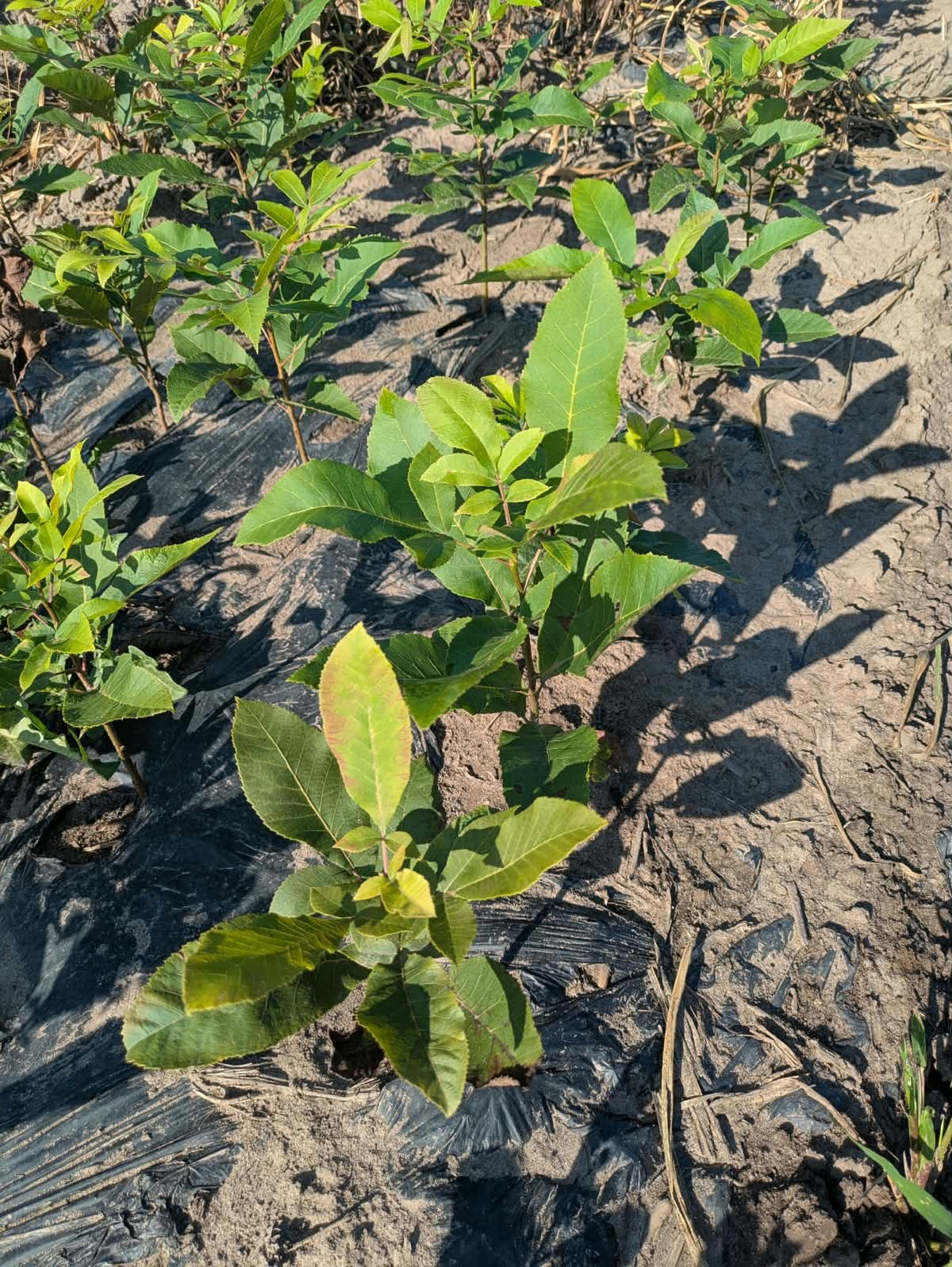


Pecan – Bare Root
Pecan – Bare Root
100 in stock
Couldn't load pickup availability
We ship bare root pecan trees. Shipping will be calculated and charged at payment.
Suited for USDA Plant Hardiness Zones: 5b-9
Bare roots can be shipped March-May.
Peach trees must be ordered in bundles of 25.
Will it thrive?
Stop! Before you buy these pecan trees....are you sure they will thrive in your soil and climate? To be sure, you should prepare a Compass Report for your farm at CanopyCompass.com.

Pecan Descriptions
Pecans
Kanza
Hardiness: 5-9 (cold hardy, bred specifically for northern pecan-growing regions)
Color: Tan to light brown shell, golden kernel
Size: small to medium (about 74 nuts per pound)
Weight: rich, buttery, sweet
Flavor: rich, buttery, sweet
Ripening for zone 5b: late September to early October
Pawnee
Hardiness: 6-9 (heat tolerant, also adaptable to northern and western growing regions)
Color: Brown shell, golden/light-colored kernel
Size: medium to large (about 49-57 nuts per pound)
Weight: rich, buttery, sweet with excellent oil content
Flavor: rich, buttery, sweet with excellent oil content
Ripening for zone 5b: early to mid September
Growing Recommendations
Instructions for Planting Bare Root Pecans
When Your Trees Arrive
-
Plant bare-root trees before they break dormancy (buds begin to swell or open).
-
Your trees will arrive wrapped in a plastic liner with the roots kept damp with moist sawdust.
-
Keeping trees cool before planting is essential. 40-50 degrees is a good target.
-
If you cannot plant them within a week or keep them cool, temporarily plant the bundle of trees in a bucket and cover it with a medium such as peat moss.
Site Preparation
-
If planting into existing sod, make sure you kill any tall fescue, orchard grass, brome, or alfalfa within a few feet of the planting area.
-
A 3% or higher concentration of Roundup will work if applied in the morning of a warm sunny day (70F or higher if possible).
-
Re-seed the area with a turf-type mix of perennial ryegrass and fine-leaved fescue such as creeping red fescue, hard fescue, Chewings fescue, and medium Dutch white clover.
-
For broadcast seedings, seed each grass at 10# per acre and clover at 1-2# per acre.
-
Space chestnuts at 20’ X 20’ - that is, 20’ apart within rows and rows at 20’ apart. This will amount to just over 100 trees per acre.
-
Lay out and flag the field beforehand, using different colored flags for alternate rows. A square grid will be easier to mow in future years.
Planting
-
Keep trees in the shade always, and keep the roots covered and moist.
-
Take just a few trees at a time out of the bag and put them in a five-gallon bucket with enough water to cover the roots. Note: This is only at the planting time; do not leave the roots soaking/fully submerged for an extended period.
-
Dig a hole that accommodates the root system without crowding, folding, or bending roots around the sides of the hole.
-
Prune off stringy, dangling roots that hang too far below the root mass. Hold the tree with one hand and backfill with the other as you plant. Hold the tree with the root crown exactly even with the soil line. The root crown/crown is the point at which the rusty bark color on the roots changes to the olive green color on the trunk.
-
You must not succumb to the temptation to plant the tree “just a little bit deeper.” Planting any part of the trunk below the soil line will kill the tree.
-
Firm the soil around the tree first with your hand, then your toes—not your heel.
After Planting
-
If you have deer or rabbits in the area, apply a vented tree shelter and stakes which are available in our store.
-
The tree shelter is a very good idea, even if you don’t have any varmints to worry about, as it will make the tree become established and bear nuts sooner than it will without a shelter.
-
Tree shelters will also save a great deal of pruning labor. Put tree shelters on the trees as soon as possible after planting.
-
Water the trees the first year, any time you go more than a week or two without at least an inch of rain.
-
Weed control is very important. Only a trained professional should apply chemicals. Your local NRCS office should have an up-to-date list of licensed applicators.
-
Using weed mats or landscape fabric cut into 3x3 foot squares is an excellent alternative to chemicals.
-
Use 6” turf staples to secure the corners and edges of the weed barrier.
-
Keep the grass between the trees short, especially while shelters are on the trees. Tall grass/weeds use a lot of moisture and provide a habitat for mice. Mice nesting inside tree shelters almost always girdle the trees, which will kill them.
We recognize these factors may be overwhelming, but we are here to offer support and assistance on your tree-planting journey! Please contact us if you have any questions or concerns.